




UX Conception

Before a screen gets styled, someone has to work out how the whole thing hangs together. That's UX concept design: we map the structure and flows underneath your product, so everything after has something solid to stand on.

Outlined gear/cog-shaped icon with a purple-to-red gradient, part of a set of geometric brand icons.

TRUSTED BY TEAMS AT:

  • Deutsche Telekom logo: white stylised letter T on a magenta background
  • Uniper logo in blue, showing the word "uniper" split across two lines.
  • GOLDBECK logo in bold black uppercase letters on a white background
  • PwC logo featuring the lowercase letters "pwc" in black with two orange diagonal shapes above
  • Vattenfall logo with the name in dark grey bold letters and a circle split into yellow upper half and blue lower half on the right
  • Schwarz-produktion logo on a white background reading “SCHWARZ PRODUKTION” in white text inside a dark blue square.
  • Cornelsen logo — white bold wordmark on a red background
  • Meridiam logo with tagline "for people and the planet" in dark green on a white background.

User flows without dead ends

A good application guides people so quietly they never think about it. We design the navigation, click paths, and screen-to-screen transitions so every action leads naturally to the next. Underneath sits a clear information architecture: content and features grouped the way people expect to find them, so nothing gets buried and no one gets lost.
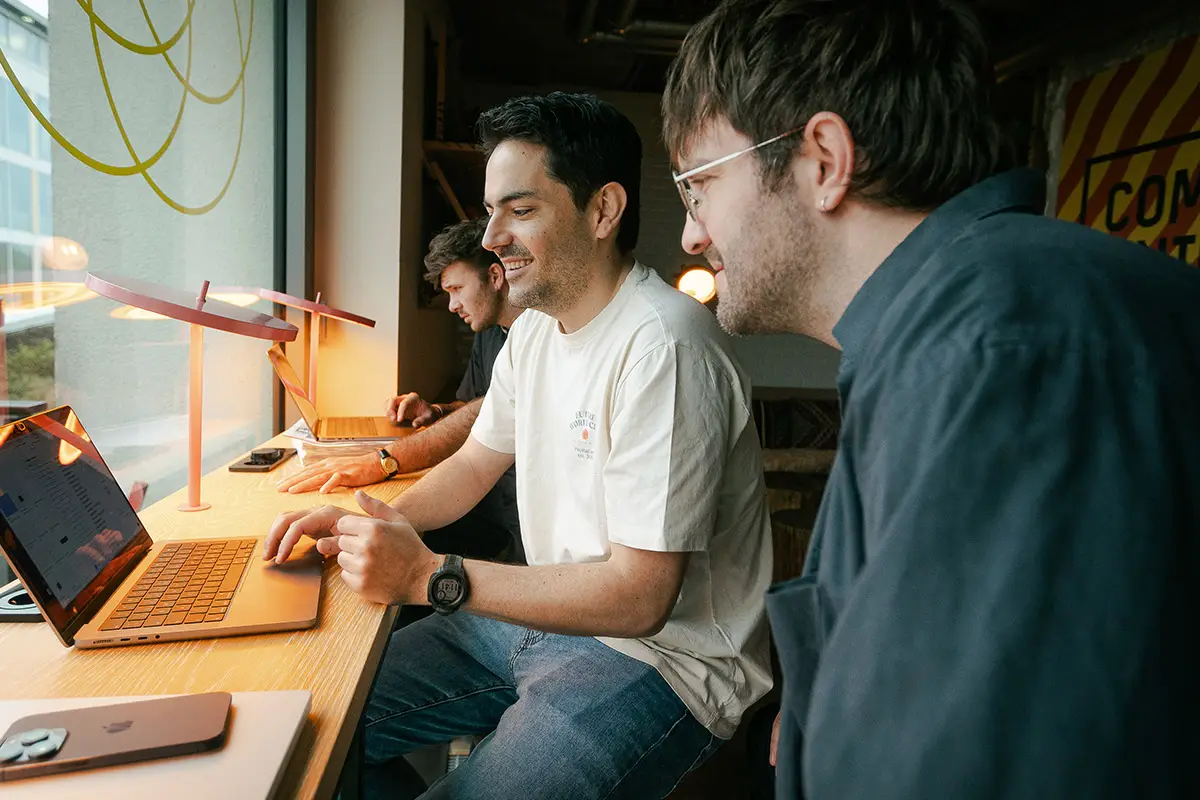

Man in a white t-shirt smiling while typing on a laptop at a wooden desk, with two other colleagues working on laptops in the background near a large window.

See it working before it's built

Wireframes turn the structure into something you can look at and click through, well before development starts. We build low-fidelity prototypes to test the core flows early, while changes are still quick and cheap to make. It's the cheapest moment to catch a problem, and the easiest place to get a team aligned.

Woman smiling and glancing toward a colleague whose hand is raised mid-gesture, seated near a curtained window.

The details where usability is won or lost

Forms are where digital processes succeed or stall. We design inputs that are clear to complete and hard to get wrong, so completion rates go up and frustration comes down. And because more people work from a phone than ever, we make sure every concept holds up on smaller screens, with load times, tap targets, and gestures that feel right on touch.

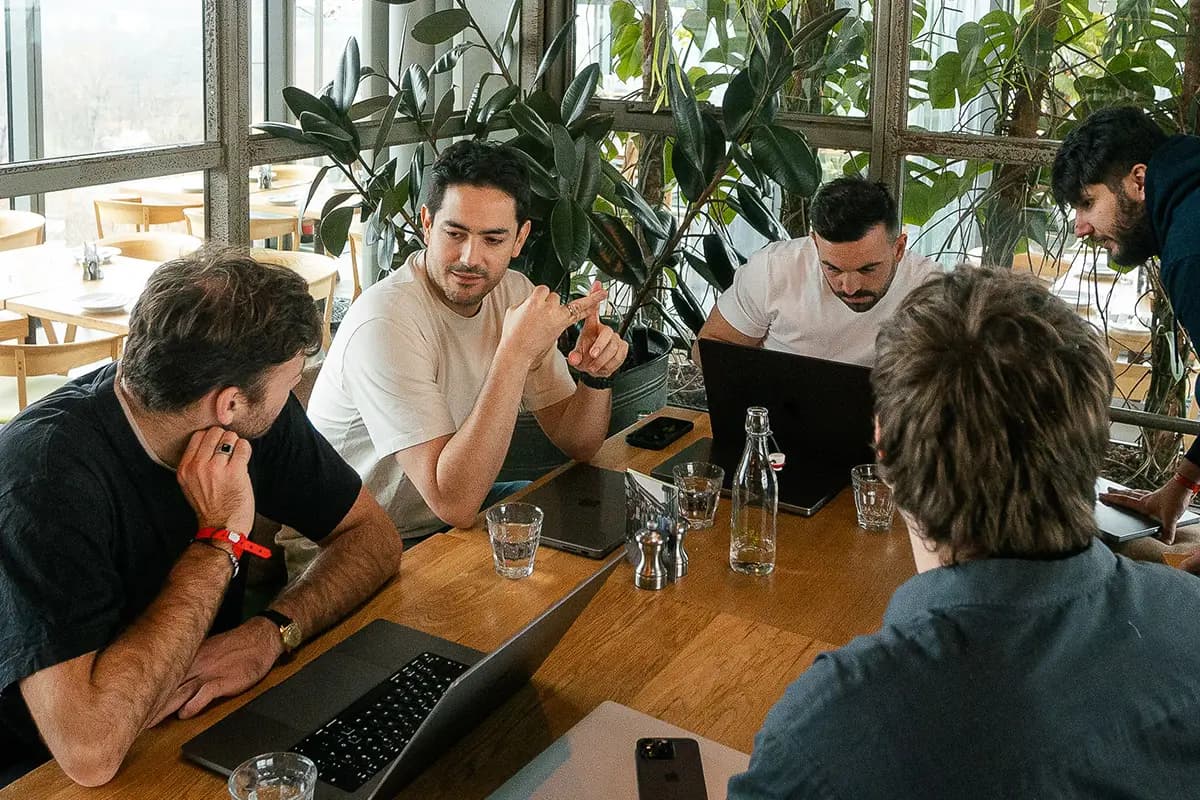
Five people gathered around a table with laptops, one man gesturing mid-explanation while others listen, potted plants in the background.

How working with us actually goes

  1. Step 01

    Initial requirement meeting

    We start by understanding your product and what it needs to achieve for the people using it.

  2. Step 02

    Structure and flows

    We map the information architecture and user flows, defining how people move through the application.

  3. Step 03

    Wireframing & prototyping

    We turn the structure into wireframes and clickable low-fidelity prototypes, testing the core flows early while changes are still cheap to make.

  4. Step 04

    Handover

    You get a clear, tested concept ready for UI design and development.

Working with 8reasons feels like having an extended team by our side that’s just as passionate about the product’s success as we are. They don’t just contribute ideas—they often think one step ahead—always solution‑oriented, creative, and incredibly dedicated. I especially appreciate how quickly they get to grips with our complex requirements, treat our users with respect, and always keep the big picture in mind. It’s not just about the user interface; it’s about truly making our product (and our team) better. Their expertise, combined with their authentic and personable manner, makes them true partners to us—ones we wouldn’t want to be without. Without them, the ICASIS team wouldn’t be where it is today.
VAIVA logo in dark navy blue bold sans-serif lettering on a light grey backgroundKelly-Anne CliffProduct Lead · VAIVA GmbH

Get the blueprint right first.

Bring us your product idea, and we'll map the structure and flows before anyone touches a pixel.