
Lakehouse architecture
We design and build a lakehouse as a single, open data foundation, scalable for both analytics and AI, and free of data silos.
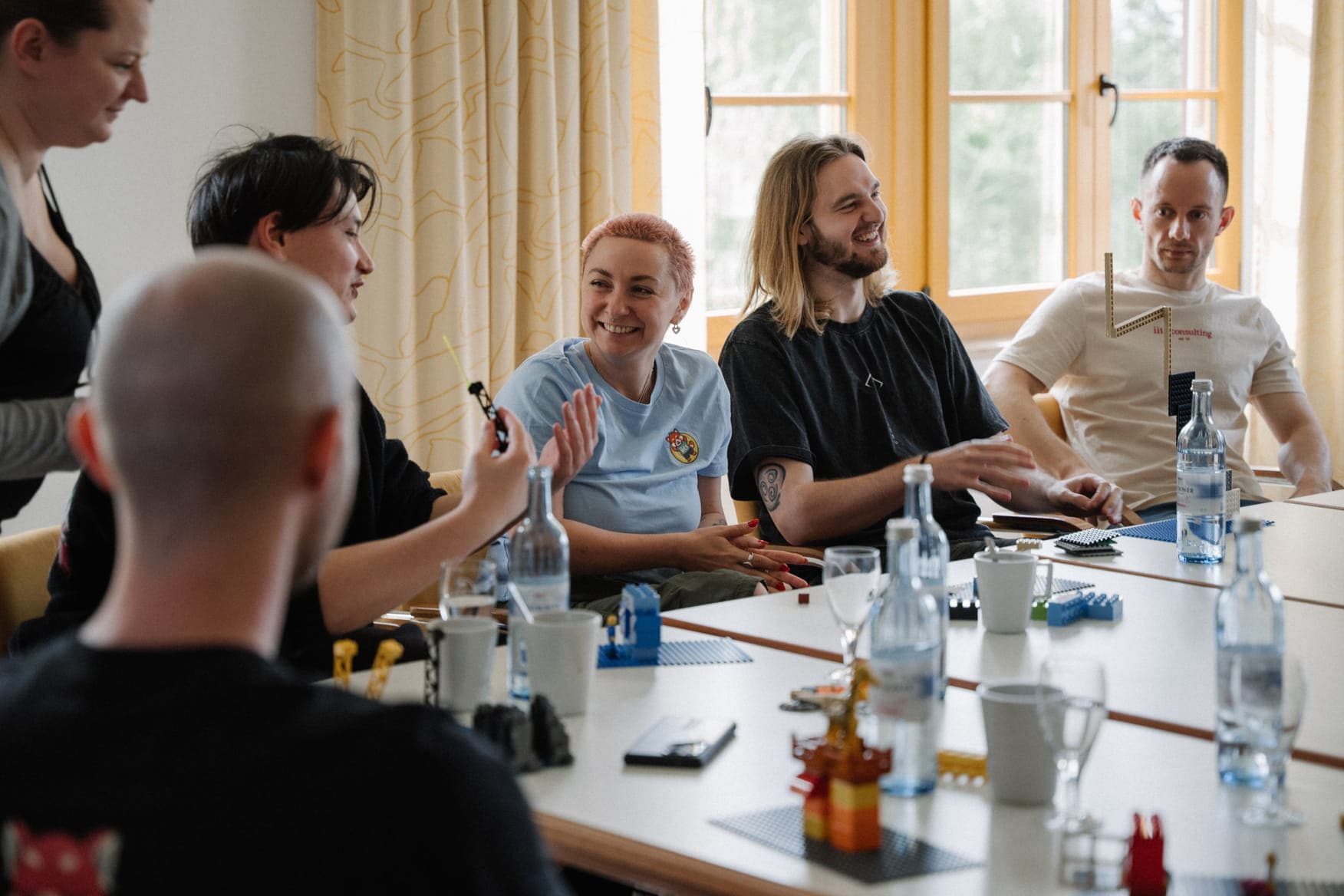
The data foundation your AI stands on, built from our digital-twin reference architecture and proven in production.
One principle runs through all of it: no service ever touches another's database. That is what keeps a platform clean enough to build on for years.
TRUSTED BY TEAMS AT:




.png&w=384&q=75)
Most AI projects fail on the data long before the model. A data platform is the foundation that stops that happening: it moves, stores, and serves your data cleanly enough that AI can actually be built on top.
Here's how the pieces fit together: an event broker distributes events by intent, an archiver writes the stream into data-lake storage that data scientists and model training read from, and AI services for anomaly, theft, and predictive-maintenance detection run alongside the business services. One principle holds throughout: services never share databases, and the frontends talk over GraphQL, WebSockets, and REST.
We design and build a lakehouse as a single, open data foundation, scalable for both analytics and AI, and free of data silos.
An event broker distributes events by intent, and anything that doesn't get through lands in a dead-letter queue. An archiver writes the stream into data-lake storage, ready for data scientists and model training to read from.
Detection services for anomalies, theft, and upcoming maintenance run on the same platform, hanging off the same event stream as the business services, with no second data store to keep in sync.
AI is only worth it once it's doing real work, safely, inside the systems you already run. Here's what you get when you build it with us.
Send InquiryWe map what data you have, where it comes from, and where the silos and breaks sit today.
We design the lakehouse, the event stream, and the interfaces, around one principle: no service touches another's database.
Collection, cleansing, and versioning run repeatably, with tests and monitoring, so silent data errors never first surface in the model.
The platform goes live, and new AI services hang off the same event stream, with no second data store to maintain.
 Software Development
 Software Development
A solid data platform pays off wherever data is scattered, high-volume, or has to feed AI. Here are a few areas where we build them.
Real-time platforms that bring sensor and grid data together for analytics and AI.
Platforms that handle network and operational data at scale, without silos.
Event-driven platforms that turn shop-floor and supply-chain data into something you can act on.
Governed, auditable data foundations for reporting, risk, and AI.
In addition to the breadth of iits’ expertise—ranging from DevOps, microservices, the Internet of Things, and front‑end development to machine learning and optimization—we were particularly impressed by the way they collaborated on such a rapidly evolving and innovative topic. In addition to their technical expertise, the iits team members were able to actively engage in technical discussions in a very pleasant manner, helping to shape them from an application perspective and providing important insights.
 Stefan Sonderfeld
The stack these systems run on with us.
Start with a no-obligation project inquiry and let our team of experts in agile development and architecture provide you with comprehensive advice on your project.