
Computer Vision for Automated Quality Control in Industrial Bakeries
The modernisation of a computer vision quality control pipeline into a modular system for reliable product tracking and counting on bakery lines.

- CUSTOMER
A large German food company
- INDUSTRY
Food Production / Manufacturing
- SERVICES
AI / Computer Vision
Overview
A large German food company operating industrial bakeries was using computer vision quality control to monitor bakery products moving through production lines. The system already included trained detection models, but the overall pipeline needed to become more modular, easier to extend, and more reliable for product tracking and counting.
Challenge
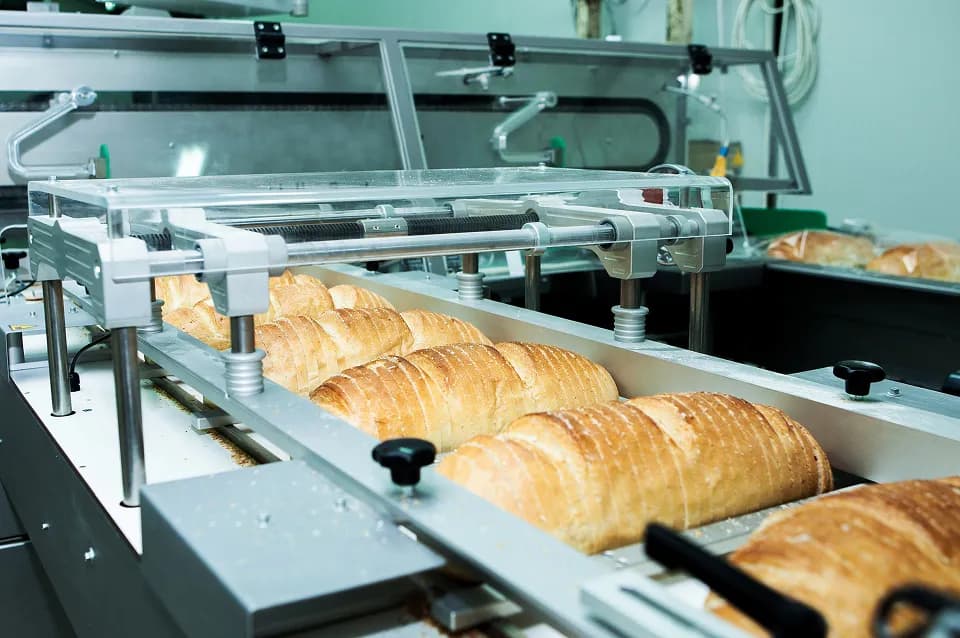
Industrial bakery production is fast-moving and visually complex. In a single camera image, there can be many bread rolls, loaves, or other bakery products visible at the same time. These products often move close together, partially overlap, or leave and re-enter the camera’s view. Counting products reliably is therefore not just a matter of detecting them in one image.
The system also needs to understand whether a product seen in the current frame is the same product that was already visible in previous frames. Otherwise, the same bread roll could be counted multiple times, or not counted at all.
Info: The customer needed a more robust and maintainable tracking pipeline that could follow bakery products across multiple frames and count them once they passed a defined point in the image.
Our Solution
iits-consulting refactored parts of the customer’s existing computer vision framework into a more modular structure. This made it easier for the customer team to build, replace, and extend individual processing modules within their AI workflow.
A central part of the work was improving the existing product-tracking logic. Bakery products detected by the existing models were tracked across multiple video frames. To count products consistently, an invisible counting line was defined in the camera image. When a tracked product crossed this line, it was counted once.
The tracking pipeline used a Kalman-filter-based approach, which was reworked and tuned to better handle the movement of many bakery products through the image. The focus was not on training new recognition models, but on improving the structure, maintainability, and reliability of the existing tracking and counting workflow.
Business Impact
The client now has a cleaner and more modular computer vision pipeline for tracking and counting bakery products in production-line footage. The improved structure makes it easier to adapt the framework, add new modules, and maintain the system over time. The tuned tracking logic also provides a more stable foundation for product counting and throughput-related production monitoring.
Got a problem we can solve?
Start with a no-obligation project inquiry and our team will advise you thoroughly on your project.